
Why Gas Prices Keep Fluctuating Yearly
Gas prices are among the most watched economic indicators in Nigeria because they directly impact the cost of transportation, electricity generation through small scale generators, and the overall price of food. Every year, millions of citizens wonder why the price per liter can move so drastically. As of April 2026, the price of gasoline has stabilized around ₦1,200 per liter, a significant shift from previous years. Understanding these fluctuations is essential for managing a household or business budget in a high value market where energy costs dictate the profit margins of almost every sector.
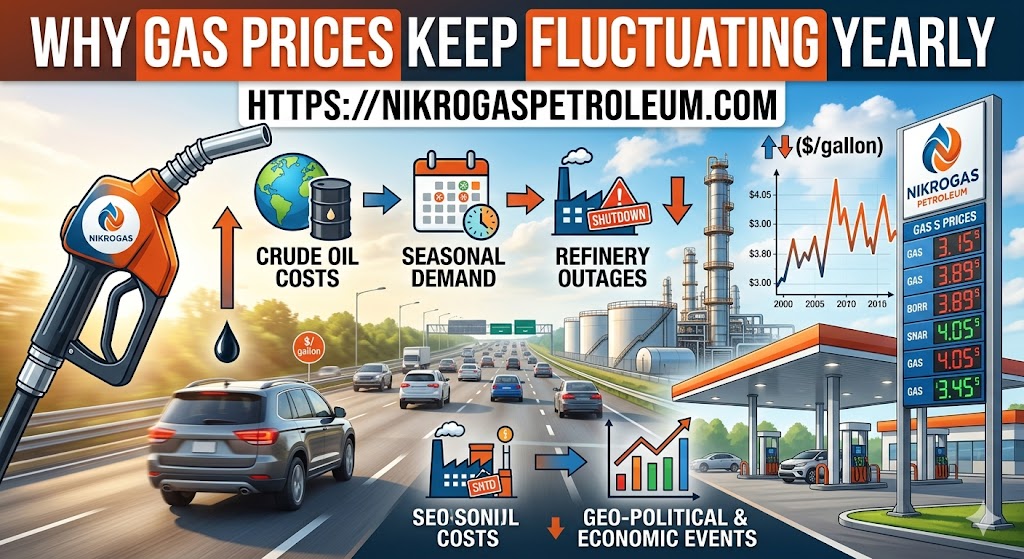
The primary driver of fuel prices in Nigeria is the transition to a fully deregulated downstream sector. This means the price at the pump is now tied directly to the international market price of crude oil and the exchange rate of the Naira against the Dollar. When crude oil prices surge globally or the currency faces pressure, the cost of importing refined products increases. For instance, if Brent crude rises toward $100 per barrel, the landing cost of petrol in Lagos and Abuja reflects that change almost immediately, leading to the ₦1,200 figures seen at major stations.
Why Gas Prices Keep Fluctuating Yearly
Global Market Dynamics and Local Refining Costs
The global market for crude oil operates on a delicate balance of supply and demand. Unlike other commodities, oil is sensitive to even the slightest disruption. Major oil producing nations, often organized under OPEC+, influence prices by deciding to cut or increase production. If there is a global supply shrink, the price per barrel climbs, and since Nigeria imports a portion of its refined needs, the local price must adjust to cover these international costs.
Beyond international prices, the local refining capacity plays a massive role. With the full operation of domestic refineries, some of the costs associated with freight and port charges are reduced, but the baseline remains tied to global benchmarks. Refineries must process crude oil into gasoline, and any maintenance or unexpected shutdown at a major facility can cause a localized supply crunch, driving the price up by ₦50 to ₦100 in certain regions.
Factors Differentiating Annual Gas Price Trends
| Price Driver | Impact Level | Estimated Cost ₦ Influence |
| Crude Oil Price | Very High | ₦550 – ₦750 per liter |
| Exchange Rate | Very High | ₦200 – ₦400 per liter |
| Distribution & Logistics | Moderate | ₦50 – ₦120 per liter |
| Marketing & Retail Margin | Low | ₦30 – ₦60 per liter |
| Regional Supply Gaps | Variable | ₦10 – ₦100 per liter |
Seasonal Variations and Holiday Demand
In Nigeria, gasoline prices often experience pressure during the end of year festivities and major holiday periods. This is driven by a massive increase in travel across the country. When demand for interstate travel peaks, the logistics of moving trucks from the coastal depots to the northern states becomes more expensive. This increased demand can lead to temporary retail price hikes. Furthermore, during the heat of the dry season, the reliance on petrol powered generators for cooling increases, putting additional strain on the available supply.
Geopolitical Instability and Trade Routes
Energy markets hate uncertainty. When a conflict arises in an oil producing region or a major shipping lane is threatened, the market reacts instantly. Even though Nigeria is a producer, the price of its refined fuel is influenced by these global “risk premiums.” In 2026, disruptions in international shipping led to higher insurance and freight costs for tankers. These costs are a major reason why prices can fluctuate even when the local supply seems steady.
Types of Fuel and Price Differences
Fuel is not a one size fits all product, and the type of energy source you use can significantly affect your annual spending.
Premium Motor Spirit (PMS)
This is the standard gasoline used by cars and small generators, currently priced around ₦1,200. It is the most sensitive to political and economic shifts. When PMS prices fluctuate, it is the primary benchmark used to measure inflation in the Nigerian economy.
Automotive Gas Oil (Diesel)
Diesel is used by heavy trucks, factories, and large scale residential generators. Diesel prices are usually higher than petrol because it is a more energy dense fuel and is used heavily in the industrial sector. When diesel prices rise to ₦1,400 or ₦1,500, the cost of transporting food from the farms to the city markets increases, making every grocery item more expensive.
Dual Purpose Kerosene (DPK)
Kerosene is primarily used for cooking and lighting in many households. Its price often fluctuates based on the availability of aviation fuel, as both products come from a similar part of the refining process. Shortages in one can lead to price spikes in the other.
How to Apply Smart Fuel Saving Strategies
While you cannot control the global price of oil or the exchange rate, you can apply several strategies to mitigate the impact of ₦1,200 per liter fuel on your finances.
Monitor Real Time Station Pricing
In a deregulated market, different filling stations offer different prices. Some independent marketers may sell for ₦1,250 while major retail outlets might stick to ₦1,200. Checking prices along your route can save you ₦2,500 to ₦5,000 on a full tank.
Maintenance for Fuel Efficiency
Applying a regular maintenance schedule to your vehicle or generator is a proven way to reduce consumption. Ensuring your car engine is tuned and your generator’s oil is changed regularly can improve fuel efficiency by up to 15%. This effectively reduces your cost per kilometer or cost per hour of power.
Strategic Consumption Habits
Try to minimize unnecessary trips by carpooling or using public transport for long distances. For generator users, applying a load management strategy—only running heavy appliances like air conditioners when absolutely necessary—can extend the life of your ₦1,200 fuel significantly.
Frequently Asked Questions (FAQ)
Why is petrol ₦1,200 in some places and more in others?
This is due to transportation and logistics costs. Bringing fuel from the seaports to inland or far northern states involves high trucking costs and “bridging” fees. Additionally, some stations have higher overhead costs which they pass on to the consumer.
Will the price of petrol ever come down to ₦200 again?
Given the current global economic climate and the removal of government subsidies, it is highly unlikely that prices will return to those historical levels. The focus now is on market stability rather than artificial price suppression.
How does the Naira exchange rate affect my fuel price?
Since crude oil is priced in Dollars, the cost to buy that oil for refining—even locally—is influenced by the Dollar’s value. If the Naira weakens, it takes more Naira to buy the same amount of oil, which raises the price at the pump.
Why do food prices go up when fuel prices rise?
Most food in Nigeria is transported by trucks that use diesel or petrol. When fuel costs move from ₦1,000 to ₦1,200, the transporters charge the traders more, and the traders increase the price of the food to cover their costs and maintain profit.
Also Read: Are Electric Vehicles Killing Gas Stations
Also Read: Jobs in Germany And United Kingdom for Foreigners
Conclusion
The yearly fluctuation of gas prices in Nigeria is a reflection of a modern, market driven economy. From the ₦1,200 per liter retail price to the global crude benchmarks, every fluctuation has a logical economic cause. By understanding these patterns and applying fuel saving habits, Nigerians can better navigate the energy challenges of 2026. Staying informed about market trends is the best way to ensure that these price changes do not disrupt your long term financial stability.